
ES125-261 Engineering Checklist: Power, Protection and Thermal Management
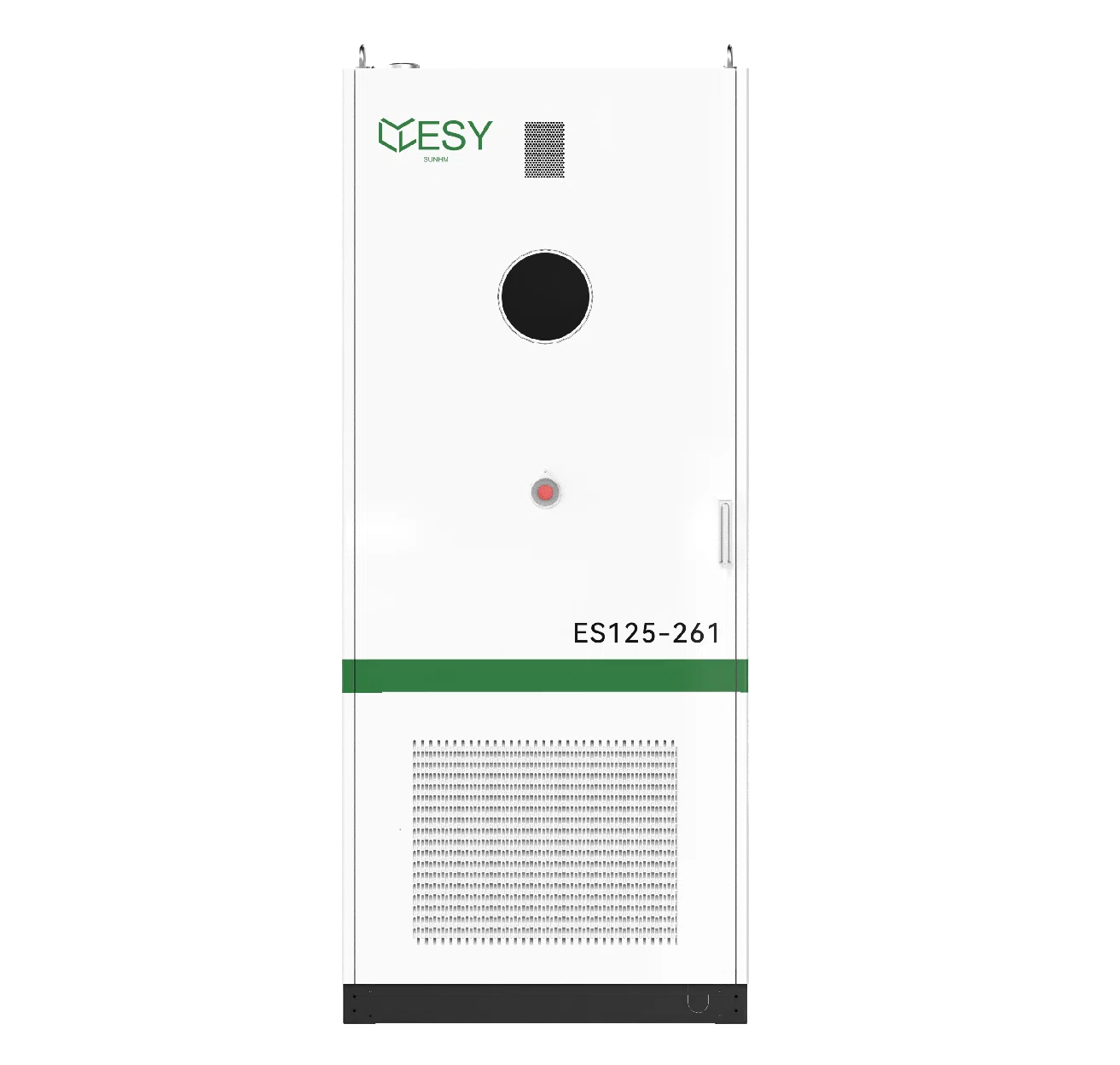
ES125-261 engineering checklist covers the main requirements for safe and reliable battery operation, including DC power design, protection settings, thermal control, installation checks, and commissioning tests. A complete review should verify voltage compatibility, current limits, BMS accuracy, cooling performance, and communication functions. For commercial applications, C&I battery storage for peak shaving projects often depend on these factors to maintain stable output, reduce peak demand charges, and support long service life.
The ES125-261 system requires electrical verification before integration with the PCS, EMS, and site power network. Engineers should confirm the battery voltage range, rated capacity, charge and discharge current, and operating limits according to the project design requirements. A mismatch between battery output parameters and PCS input specifications may reduce efficiency or trigger protective shutdowns during high-power operation.
Typical electrical checks include:
| Item | Recommended Engineering Review |
|---|---|
| Battery capacity | Verify rated and usable energy under defined operating conditions |
| DC voltage range | Confirm compatibility with PCS operating window |
| Maximum current | Check continuous and peak discharge capability |
| SOC range | Review charging and discharging limits |
| Efficiency | Validate system efficiency under actual load conditions |
| Communication | Confirm BMS, PCS, and EMS data exchange |
For commercial energy storage systems, voltage accuracy and current control are usually verified during factory acceptance tests before shipment. A deviation of only several percent in cell voltage measurement accuracy can influence SOC estimation and battery balancing performance.
The power architecture review should include cable selection, protection devices, and connection methods. DC cables must be sized according to maximum current, installation distance, ambient temperature, and allowable voltage drop. In many industrial installations, engineers maintain voltage drop below 1% to 2% to reduce energy losses during frequent charging and discharging cycles.
Protection design requires multiple layers of monitoring and interruption functions. The ES125-261 battery system should monitor cell voltage, module temperature, pack current, insulation status, and abnormal operating conditions through the BMS. Protection parameters must be tested to confirm that the system responds correctly during over-voltage, under-voltage, over-current, and short-circuit conditions.
Important protection checks include:
-
Over-voltage and under-voltage thresholds for individual cells.
-
Maximum charging and discharging current limits.
-
Insulation resistance monitoring.
-
Emergency shutdown response.
-
Circuit breaker and fuse coordination.
A protection system should separate normal operating control from fault response. Normal charging limits may be managed by the BMS, while severe electrical faults require fast isolation through external protection equipment.
Thermal management has a strong influence on lithium-ion battery performance. Battery cells generally operate within a recommended temperature range, commonly around 15°C to 35°C for many commercial systems. When temperature differences between cells increase, some cells may age faster than others, creating imbalance during repeated cycles.
The ES125-261 thermal review should evaluate cooling capacity, airflow or liquid circulation paths, temperature sensor placement, and HVAC control logic. Engineers should confirm that cooling equipment can remove heat generated during maximum power operation.
| Thermal Parameter | Engineering Check |
|---|---|
| Operating temperature | Confirm site temperature range compatibility |
| Cell temperature difference | Verify uniform temperature distribution |
| Cooling capacity | Match cooling output with maximum heat generation |
| Sensor accuracy | Validate temperature measurement reliability |
| HVAC control | Check automatic regulation performance |
The thermal system is especially important for applications such as ES125-261 ESS used for industrial peak management, where batteries may experience repeated daily cycles. In many commercial projects, systems complete 1 to 2 charge-discharge cycles per day, resulting in hundreds of operating cycles annually.
Installation inspection should cover mechanical placement, environmental conditions, cable routing, and maintenance access. The battery enclosure should be installed on a suitable foundation with sufficient clearance for inspection and service. Outdoor installations require evaluation of temperature, humidity, dust protection, and weather resistance according to the local environment.
The installation checklist generally includes:
| Inspection Area | Verification |
|---|---|
| Foundation | Confirm weight support and stability |
| Cable routing | Check DC and AC cable installation |
| Grounding | Verify protective grounding connection |
| Ventilation | Confirm heat removal pathway |
| Safety equipment | Check emergency systems and warning devices |
Installation quality affects long-term operation because poor cable connections, insufficient ventilation, or incorrect grounding can increase maintenance requirements during the service period.
Commissioning tests should be completed after mechanical and electrical installation. Before energization, engineers should measure insulation resistance, inspect terminal torque, verify communication signals, and confirm correct polarity. Functional testing should then evaluate charging, discharging, power response, alarm functions, and thermal performance.
A standard commissioning process may include:
-
Initial system inspection.
-
BMS parameter verification.
-
PCS communication testing.
-
Charge and discharge capacity testing.
-
Protection function testing.
-
Thermal performance evaluation.
Capacity testing is commonly performed by charging the battery to a defined SOC level and discharging it under controlled conditions. Test results are compared with rated specifications to confirm available energy. For example, a system rated at 125 kWh may be evaluated under different discharge rates to verify usable capacity under actual operating conditions.
Operational monitoring after commissioning helps maintain stable performance. Battery systems continuously collect information such as cell voltage difference, temperature distribution, SOC accuracy, and alarm records. Reviewing this information allows operators to identify changes in system performance before they affect availability.
For C&I battery storage for peak shaving applications, operators usually focus on:
| Monitoring Data | Purpose |
|---|---|
| SOC accuracy | Maintain planned charging schedules |
| Cell voltage difference | Evaluate battery balance |
| Temperature records | Review cooling performance |
| Charge cycles | Estimate aging trend |
| Alarm history | Improve maintenance planning |
Battery lifecycle performance depends on operating temperature, charging strategy, depth of discharge, and maintenance quality. Research published in recent years has shown that lithium-ion batteries stored and operated at higher temperatures may experience faster capacity reduction compared with batteries maintained near moderate temperatures. Temperature control and proper operating limits can therefore help extend service periods.
The ES125-261 engineering checklist provides a practical method for reviewing battery system performance from design through operation. Electrical verification, protection testing, thermal assessment, installation inspection, and commissioning procedures work together to support reliable energy storage operation across commercial and industrial applications.
Don't miss today's near-zero listings.
The catalog refreshes every 47 minutes. Subscribers get the freshest dumps before they hit the public feed.
Get Today's Zero-Dollar Deals